Service
High Performance Valve Jobs
Precision seat machining, guide work, concentricity, vacuum testing, and spring setup — on dedicated equipment, in-house.
Overview
What this service delivers
A high-performance valve job at Paul Ferreira Racing Engines is seat machining, guide work, concentricity control, vacuum verification, and spring setup — performed as one accountable process. Paul cuts seats on dedicated equipment, corrects guides so the valve runs true, verifies seal with vacuum testing, and sets springs for the cam and RPM range. The head leaves ready to seal and control the valve under racing loads.
Key Facts
- Valve seats machined on dedicated equipment
- Guide work included for true valve travel
- Seat-to-guide concentricity held to a tight standard
- Vacuum testing verifies seal on the bench
- Spring setup matched to cam and RPM
- Completed entirely in-house
Scope of Work
What's Included
Valve Seat Machining
Seats are cut on dedicated seat equipment for correct angles, widths, and depth — matched to the valve and the performance goals of the head.
Valve Guide Work
Guides are inspected and corrected as required so the valve runs true through the seat. Worn guides are addressed before they ruin a fresh seat job.
Seat Concentricity
Seat-to-guide concentricity is held to a tight standard. A seat that is not concentric with the guide will not seal, no matter how good it looks.
Vacuum Testing
Sealing is verified with vacuum testing so leak-down at the seat is caught on the bench — not after the head is bolted on the engine.
Spring Setup
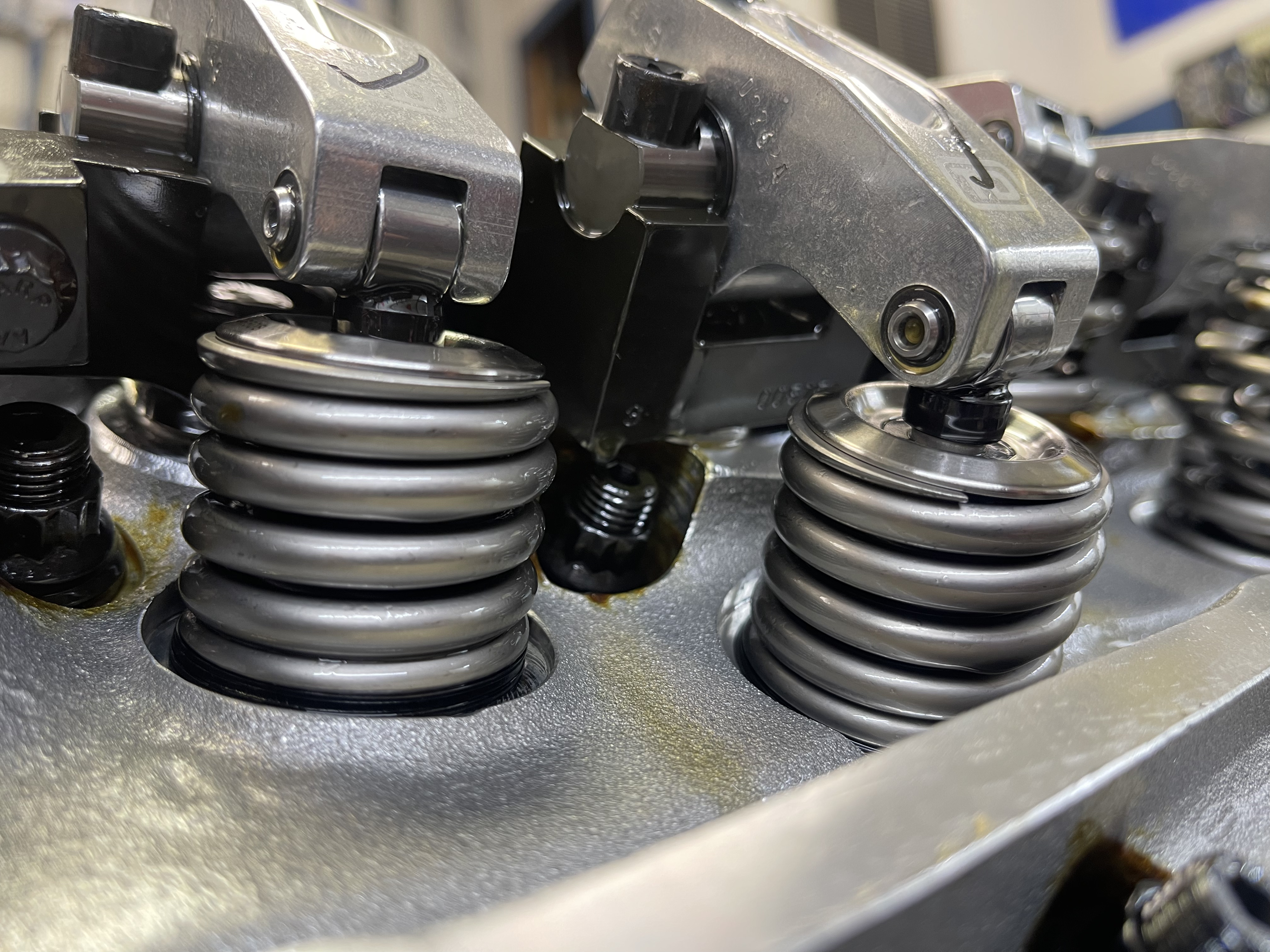
Spring pressures and installed heights are set for the cam and RPM range. The valvetrain leaves the shop ready to control the valve, not just close it.
Why It Matters
A valve job has to seal — and stay sealed
At racing RPM, valves open and close thousands of times per minute. Seat width, seat angles, guide clearance, and spring pressure all decide whether the valve seals cold, seals hot, and stays under control at the top of the rev range.
A performance valve job is not a cosmetic three-angle cut. Seats must be concentric with the guides. Guides must be sound. Seal must be proven — which is why vacuum testing is part of the process here, not an optional check. If the seat leaks on the bench, it will leak on the engine.
Paul's shop runs this work on dedicated seat equipment because that is what concentric, repeatable seat machining requires. The machine is not a showpiece; it is how the standard gets held job after job.
Spring setup closes the loop. Correct installed height and pressure keep the valve following the cam. A sealed seat with the wrong spring package is still a valvetrain problem waiting for the next session.
Builders send heads to Fort Myers for valve jobs that are cut, vacuum-tested, and spring-set under one roof.
The Process
Paul's Process
- 01
Inspect
Seats, guides, and valves evaluated for condition.
- 02
Machine Seats
Precision seat cutting on dedicated equipment.
- 03
Guide Work
Guides corrected so valves run true to the seat.
- 04
Vacuum Test
Seat seal verified before the head is released.
- 05
Spring Setup
Springs set for cam requirements and RPM target.
The Standard
Why Paul Ferreira
Equipment That Matches the Work
High-performance seat work demands dedicated machinery and a process built around concentricity — not a hurried three-angle pass on worn tooling. Paul runs the valve job on equipment suited to the standard the shop holds.
Concentricity Is the Job
A seat that is not concentric with the guide will not seal under load. Paul treats concentricity as a requirement, then proves the seal with vacuum testing.
Guides Before Seats
Cutting a perfect seat into a head with tired guides is wasted work. Guide condition is part of the valve job, not an optional add-on.
Springs That Control the Valve
The job is not finished when the seat seals. Spring setup is included so the valvetrain is ready for the cam and the RPM range the engine will see.
Ready for a proper valve job?
Bring the heads and the cam specs. Paul will machine, verify, and set the springs — then vacuum-test the seal before they leave.