Service
Block Resurfacing
A true, flat deck with a finish matched to your gasket. Inspected, resurfaced, and verified in-house.
Overview
What this service delivers
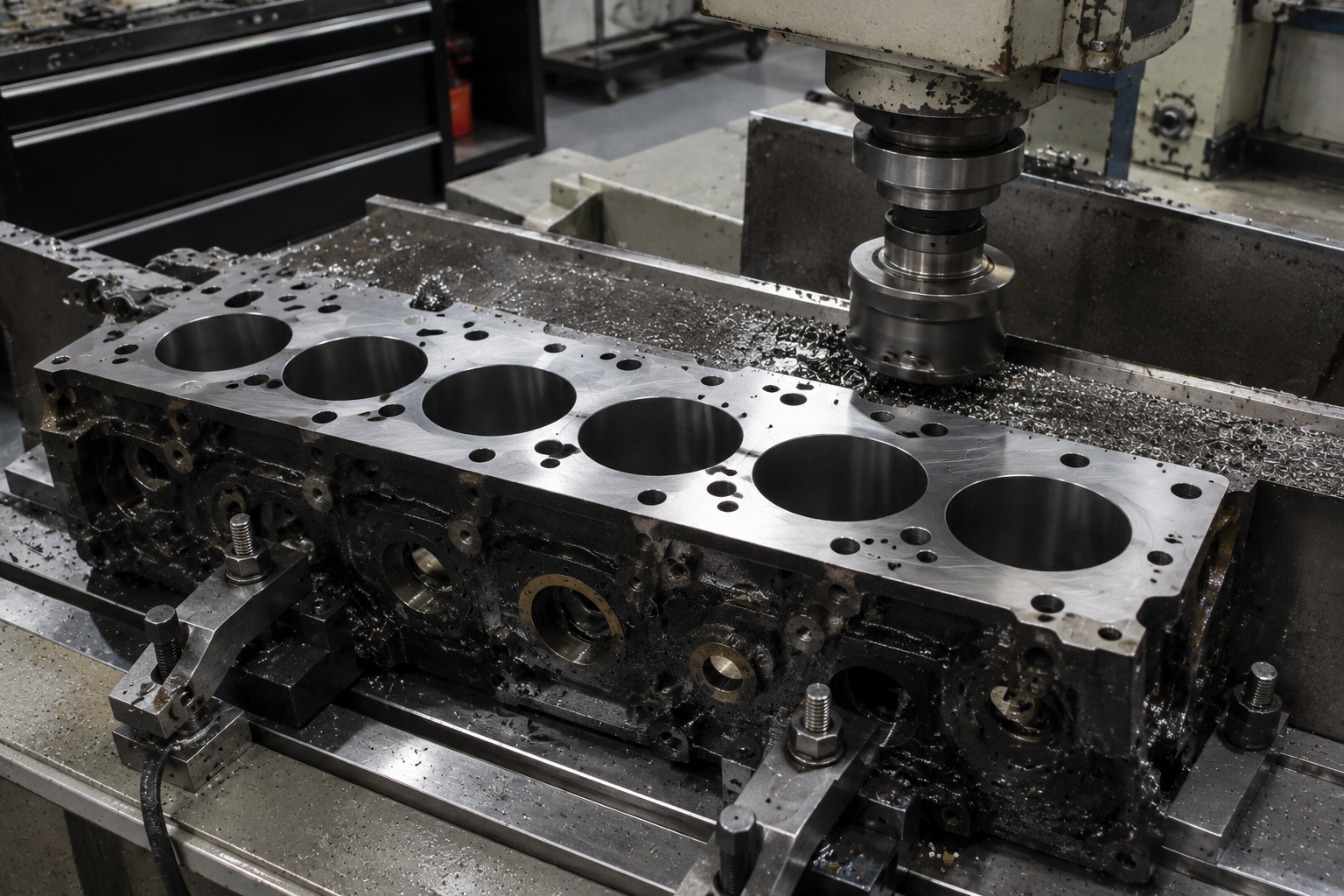
Block resurfacing at Paul Ferreira Racing Engines restores the deck to a flat, gasket-ready sealing surface. Paul inspects flatness, resurfaces the deck with controlled material removal, and optimizes the finish for your gasket package — including MLS when that is the sealing strategy. The deck is verified before the block leaves the machine so head gasket seal and deck height decisions are based on real geometry.
Key Facts
- Deck flatness inspected before machining
- Controlled resurfacing — no excess material removed
- Surface finish matched to gasket type
- MLS-compatible finish when required
- Final flatness and finish verified
- Machined entirely in-house
Scope of Work
What's Included
Flatness Inspection
The deck is checked for flatness and existing surface condition before any material is removed. Warpage and previous cuts are documented, not guessed.
Deck Resurfacing
The block deck is resurfaced to restore a true, flat sealing surface with controlled material removal — enough to correct, not enough to waste compression height.
Finish Optimization
Surface finish is set for the gasket type and sealing strategy your build uses, with attention to Ra and lay that MLS and composite gaskets actually need.
MLS Compatibility
When multi-layer steel gaskets are part of the plan, the deck finish is prepared to that standard — not left at a generic mill finish.
Final Inspection
Flatness and finish are re-checked after machining. The deck leaves the machine verified, ready for head gasket and assembly.
Why It Matters
Head gasket seal starts at the deck
The block deck is half of the combustion seal. If it is warped, uneven, or finished for the wrong gasket, no amount of torque sequence or sealant improvisation will hold cylinder pressure under racing heat cycles.
Resurfacing corrects flatness and establishes a surface the gasket was designed to seal against. That means measuring first, cutting with intent, and finishing to the Ra and lay the gasket manufacturer — and the application — require. MLS gaskets in particular are unforgiving of a rough or inconsistent deck.
Material removal also changes deck height, which affects piston-to-deck clearance and compression ratio. Paul treats that as part of the machining decision, not an afterthought discovered at assembly.
A verified deck gives the head gasket a fair chance — and gives the builder accurate numbers for the rest of the build.
Shops and racers rely on this Fort Myers deck work when gasket seal and deck height have to be right the first time.
The Process
Paul's Process
- 01
Inspect
Deck flatness and surface condition measured.
- 02
Resurface
Controlled cut restores a true deck plane.
- 03
Finish
Surface finish optimized for the gasket package.
- 04
Verify
Final flatness and finish inspection before release.
The Standard
Why Paul Ferreira
Flatness First
A head gasket cannot seal a deck that is not flat. Paul measures before cutting and verifies after, so the sealing surface is true — not assumed.
Finish for the Gasket
MLS and composite gaskets want different surface finishes. Paul machines the deck for the gasket that will actually be used, not a one-finish-fits-all result.
Material Removed with Intent
Every cut changes deck height and compression. Paul removes only what is required to restore flatness and finish, and keeps the numbers available for the build.
One Shop, Full Chain
When the same builder resurfaces the deck and later sets piston-to-deck clearance, nothing gets lost between a machine shop and an assembly bay.
Need the deck done right?
Tell Paul the gasket package and the build goals. He will resurface for flatness and finish — not a generic mill pass.