Service
Cylinder Honing
Correct bore geometry and a surface finish matched to your rings. Measured, honed, and verified in-house.
Overview
What this service delivers
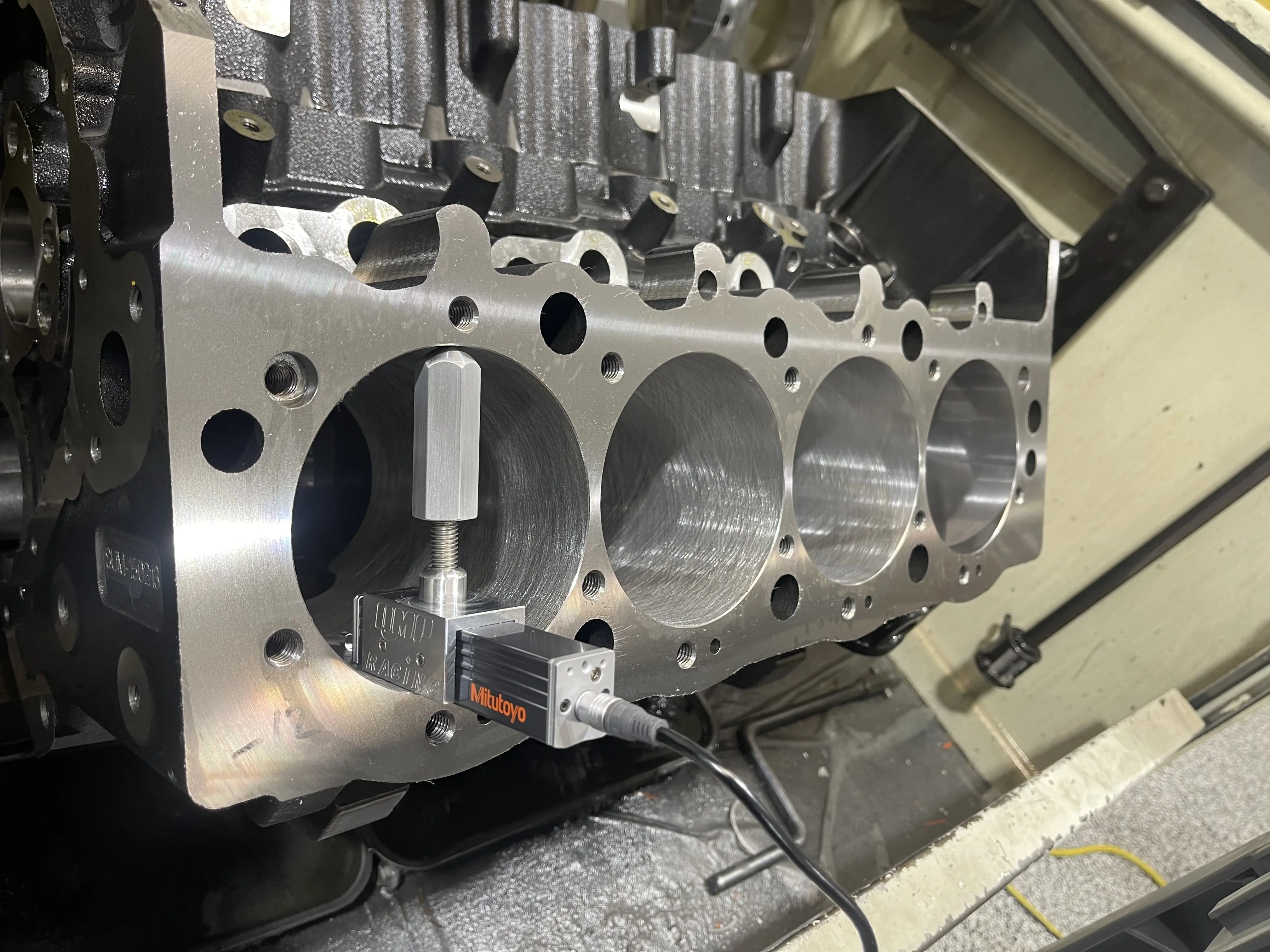
Cylinder honing at Paul Ferreira Racing Engines is about more than a fresh crosshatch. Paul measures each bore for size, taper, and roundness, then hones to the geometry and surface finish your ring package requires. The result is a bore that seals, seats rings properly, and holds oil control under racing loads — not a cosmetic finish that looks right under a light.
Key Facts
- Bore geometry measured before and after honing
- Surface finish matched to ring type
- Controlled crosshatch for oil retention and seal
- Performed in-house on calibrated equipment
- Final diameters documented
- Suitable for refresh work or full builds
Scope of Work
What's Included
Bore Inspection
Each cylinder is measured for diameter, taper, and out-of-round before any honing begins. Geometry problems are identified, not hidden under a fresh crosshatch.
Precision Honing
Bores are honed to the target size and shape on equipment Paul maintains and trusts. Controlled material removal — not a rough pass and a hope.
Surface Finish Optimization
Crosshatch angle and roughness are set for the ring package and oil control your engine needs, not a one-size-finish for every job.
Ring Compatibility
Hone finish and final bore size are matched to the ring type and end-gap strategy for the application — street, circuit, or drag.
Final Measurements
Every bore is re-measured after honing. You get documented diameters and confirmation that geometry and finish meet the target.
Why It Matters
Ring seal starts with bore geometry
Piston rings cannot compensate for a cylinder that is tapered, out of round, or finished for the wrong ring design. Blow-by, oil consumption, and inconsistent cylinder pressure often trace back to honing that prioritized speed over measurement.
Correct honing establishes round, straight bores at the target diameter, then applies a surface finish that lets the rings seat and control oil. That finish is not universal. A race ring package and a different oil strategy want a different plateau and crosshatch than a generic rebuild.
Paul treats honing as a measured machining step, not a cleanup pass. Bores are inspected, honed, inspected again, and verified before the block leaves the machine. When the engine is assembled later — here or as part of a customer-supplied build — the clearances are based on real numbers.
That is how you get consistent seal and predictable oil control across the life of the ring package.
Racers and shops bring blocks to Fort Myers because the geometry work is measured, not assumed.
The Process
Paul's Process
- 01
Measure
Bore diameter, taper, and roundness recorded.
- 02
Hone
Precision honing to size and surface finish target.
- 03
Inspect
Geometry and crosshatch verified mid-process.
- 04
Verify
Final measurements documented before the block moves on.
The Standard
Why Paul Ferreira
Geometry Before Finish
A pretty crosshatch on a tapered or out-of-round bore does not seal rings. Paul corrects and confirms geometry first, then dials the surface finish for the ring package.
Matched to Your Rings
Different ring designs want different finishes. Paul hone-finishes for the rings that will actually go in the engine — not a generic shop default.
Measured In-House
Honing happens on Paul's equipment, under his process. Nothing is sent out, and nothing is assumed from a previous shop's numbers without verification.
Documented Results
Final bore sizes are measured and recorded. If the block is part of a larger build, those numbers feed directly into ring end-gap and assembly decisions.
Need your block honed right?
Bring the block and the ring package details. Paul will hone to geometry and finish — not to a shop default.