September 5, 20256 min read
What Is Line Honing?
By Paul Ferreira
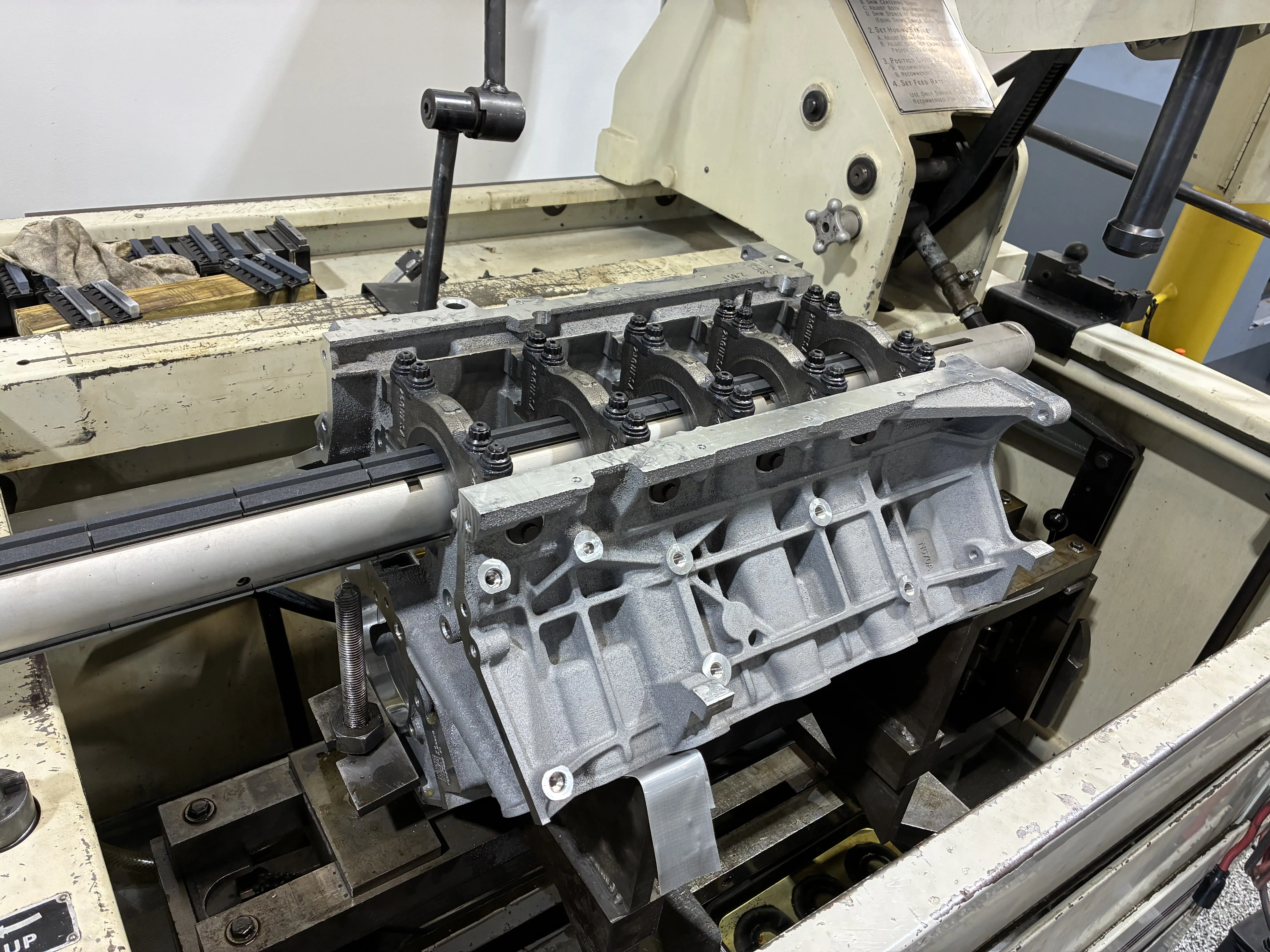
Line honing is one of those operations people have heard of but rarely see explained clearly. In plain terms, it is precision work on the main bearing bores so they are aligned and sized correctly for the crank. When mains are out, bearings wear unevenly, oil films break down, and spun journals become a matter of time. Line honing is how we put that housing back into a true condition.
What Goes Wrong With Main Bores
Blocks distort from heat cycles, overheating events, and previous machining. Aftermarket main caps can change bore shape when installed. Age alone can leave alignment outside what a performance clearances chart assumes. You will not always see the problem with a flashlight. You find it by measuring and by feeling how the crank turns with known-good bearings.
Ignoring main alignment and hoping a wider bearing clearance will mask it is not a strategy. Extra clearance does not straighten a crooked house.
What the Process Achieves
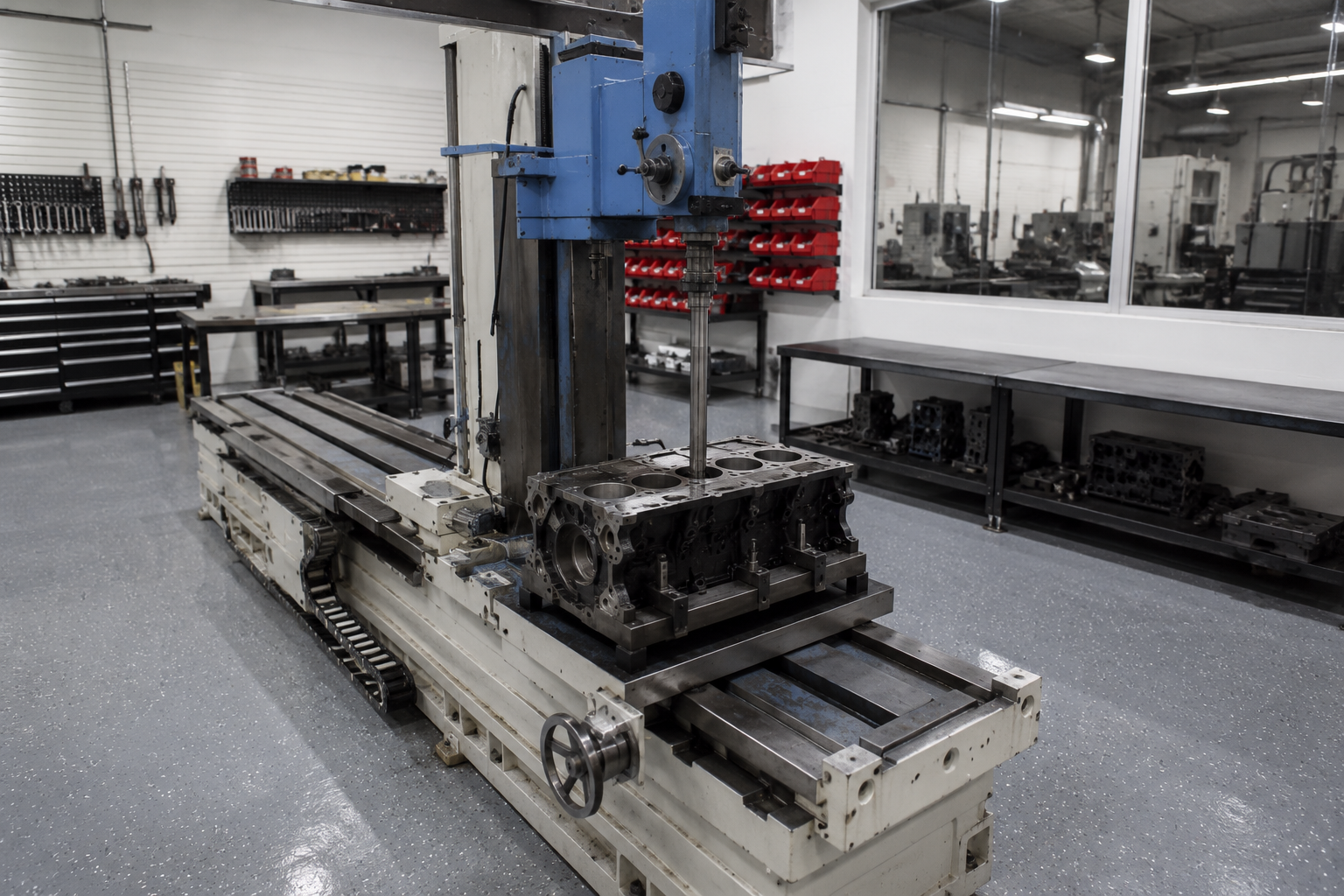
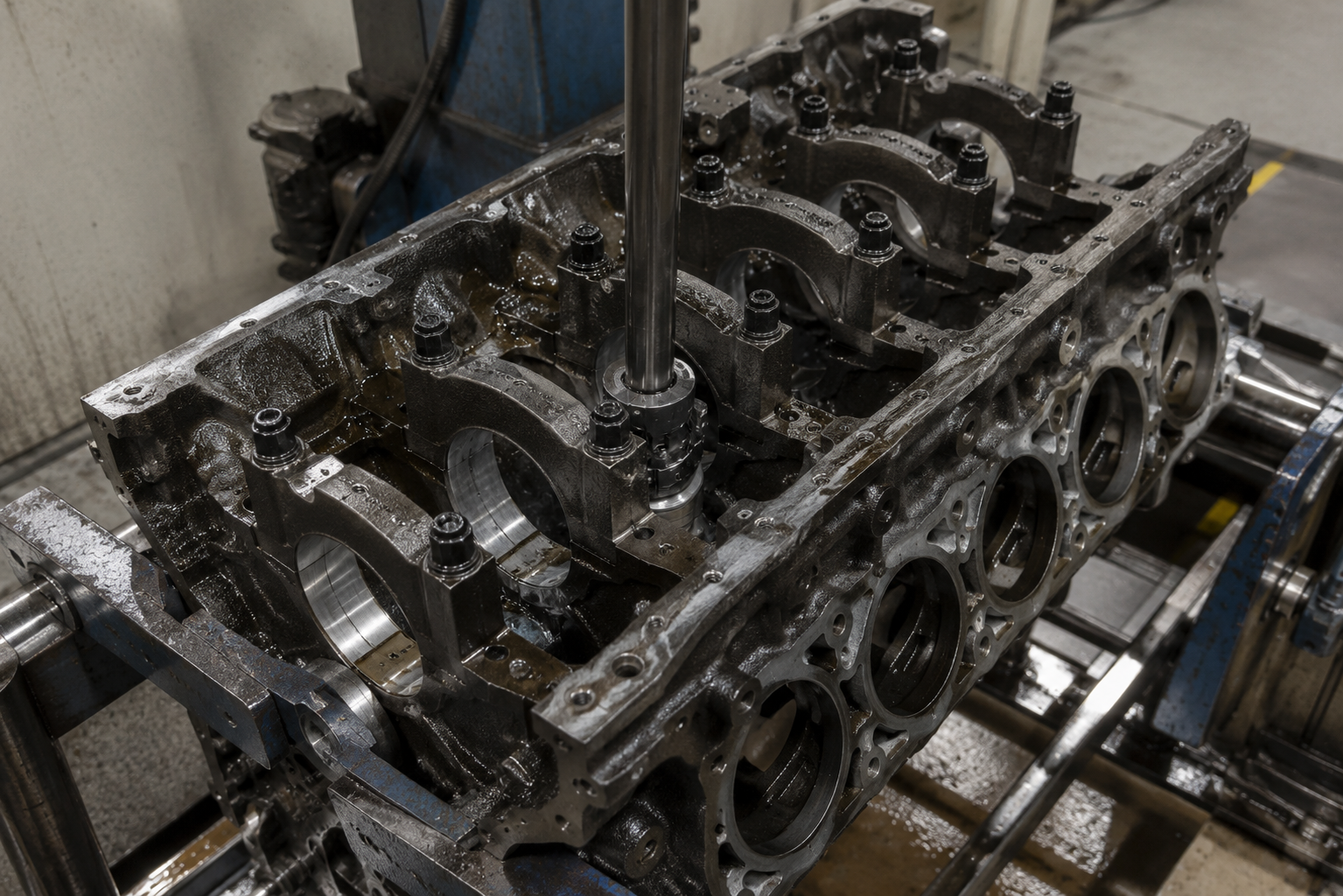
With the caps installed and torqued as they will run, the main line is honed so the bores are round, sized, and aligned with each other. The result is a crank that can spin with consistent bearing clearance along the line. That consistency is what keeps oil film and bearing life predictable under load — especially when rpm and cylinder pressure leave little room for a tight spot in one main.
Line honing does not replace crank grinding, does not fix a bent crank, and does not substitute for proper bearing selection. It fixes the block side of the equation. Both sides still have to meet in the middle at the clearance the oiling system and rpm demand. Treat it as geometry correction, not as a magic cure for every bottom-end noise.
What You Should Feel and Measure Afterward
After line work, the crank should turn with a consistent, healthy feel on the correct bearings — not tight spots that wander as you rotate. Clearances should fall in the window for the oil and rpm plan. If they do not, you stop and ask why. Line honing is finished when the housing is true and the numbers agree, not when the machine has made a pass.
I also remind owners that assembly cleanliness and fastener practice still matter. A true main line filled with debris or torqued inconsistently will not save the bearings. Machine work creates the geometry; assembly keeps it honest.
How It Fits a Larger Build
I decide on line work from measurements, not from habit. Some blocks need it. Some do not. When they do, it belongs early enough in the machine plan that later deck and bore work still reference a stable bottom end. Doing everything else first and discovering a main problem late is an expensive way to learn sequencing.
If your block’s main bores need to be brought back to true alignment and size, that is exactly what line honing is for — and it is the service I use when the measurements say the crank housing is no longer honest.
Frequently Asked Questions
When does an engine need line honing?
When main bore alignment or size is out of the window the crank and bearings need — after heat, previous machine work, cap changes, or measured distortion. If the crank does not turn freely with proper bearings and lubrication, or measurements show the mains are no longer true, line work belongs on the ticket.
Is line boring the same as line honing?
Not exactly. Line boring typically removes more material to re-establish a bore; line honing is a precision finishing and alignment process used to bring mains to size and straightness with finer control. Which process you need depends on how far the block is out and what the measurements show.
Does line honing fix a worn crank?
No. Line honing corrects the block’s main bores. A damaged or undersize crank still needs its own journal work or replacement. Both sides of the bearing clearance equation have to be right.