July 18, 20267 min read
How Often Should Valve Springs Be Checked?
By Paul Ferreira
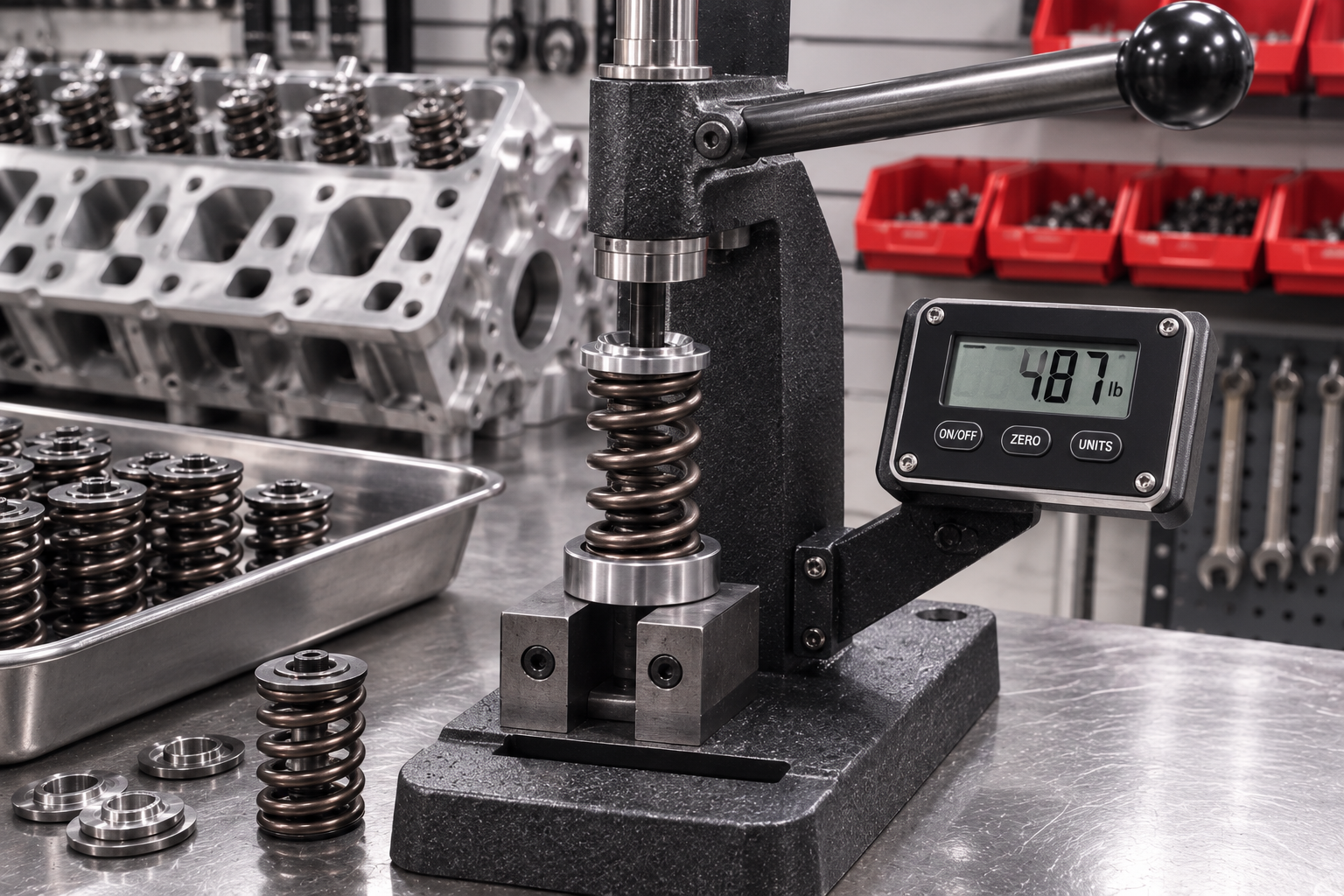
Valve springs do not announce failure politely. They lose load gradually, then suddenly the valvetrain is floating, the seat is hammered, or a valve kisses a piston. The question I get most is not whether springs matter — it is how often they should come off the head and onto a tester. The honest answer depends on how hard the engine works, how aggressive the cam is, and whether you have a build sheet with real installed-pressure numbers to compare against.
What Actually Changes Over Time
Heat cycles, coil stress, and seat pounds take a toll. Race springs live at higher loads and higher rpm, so they shed pressure faster than a mild street package. Titanium retainers, beehive designs, and dual springs each age differently. What stays constant is the need to know closed and open pressure at the installed height you actually run — not catalog claims from a new box of springs.
I also watch for coil bind clearance, retainer-to-seal clearance, and seat concentricity when the head is apart. A spring that still makes pressure but is running out of travel is still a problem. Pressure alone does not tell the whole story if the geometry around the spring has changed.
Intervals That Make Sense in the Shop
For dedicated race engines, I treat spring checks as seasonal maintenance at minimum. If the car sees frequent short-track heat or sustained high rpm, I want numbers more often — especially after any missed shift, over-rev, or unexplained loss of top-end. For street and street/strip engines with milder cams, an annual check or a check whenever the heads come off for other work is usually enough, provided nothing feels off.
New builds get a baseline on the tester before the engine ever fires. That sheet becomes the reference. Without a baseline, you are guessing whether a spring is tired or was never right. Guessing is how people keep running springs that are already out of the safe window.
Symptoms That Should Not Wait for a Schedule
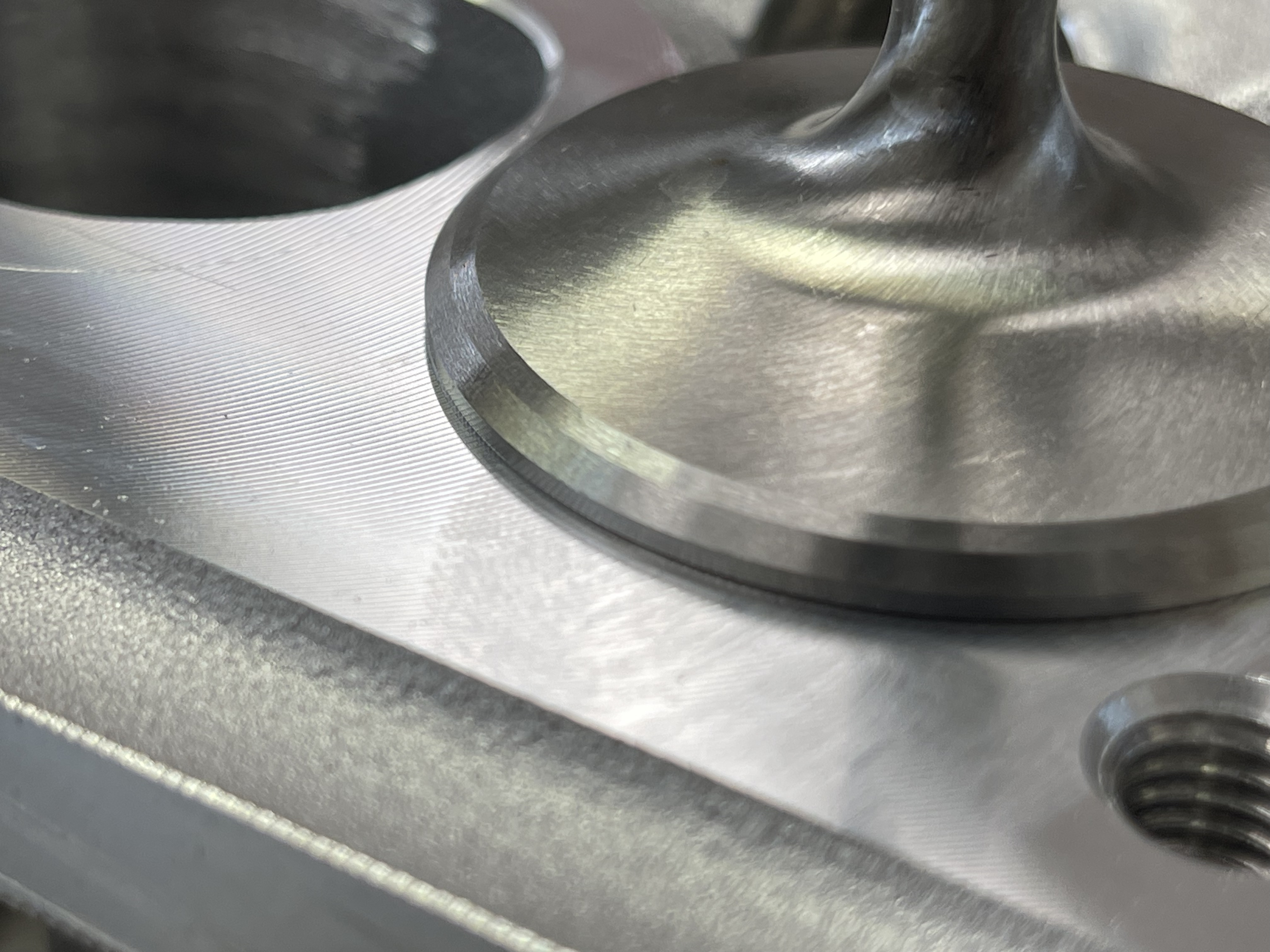
Do not wait for a calendar if the engine starts making valvetrain noise it did not have before, if power falls off upstairs, or if you find unusual seat wear or valve face patterns. Those are reasons to pull the springs now. The same goes after a cam swap: the spring package has to match the new lobe and lift, and old springs that were marginal on the previous cam are not automatically fine on a more aggressive one.
When springs come out, I check the set as a set. Mixing new and tired springs across a head is a fast way to uneven cylinder behavior. If half the springs have drifted and half have not, replace the package and reset installed heights properly.
How I Use the Numbers
On the tester I record closed and open pressure at the heights used in the engine. I compare those to the cam manufacturer's guidance and to the build sheet from when the head was set up. Small drift happens. A clear drop outside the setup window means the spring is done for that application. I would rather replace springs early than explain a dropped valve later.
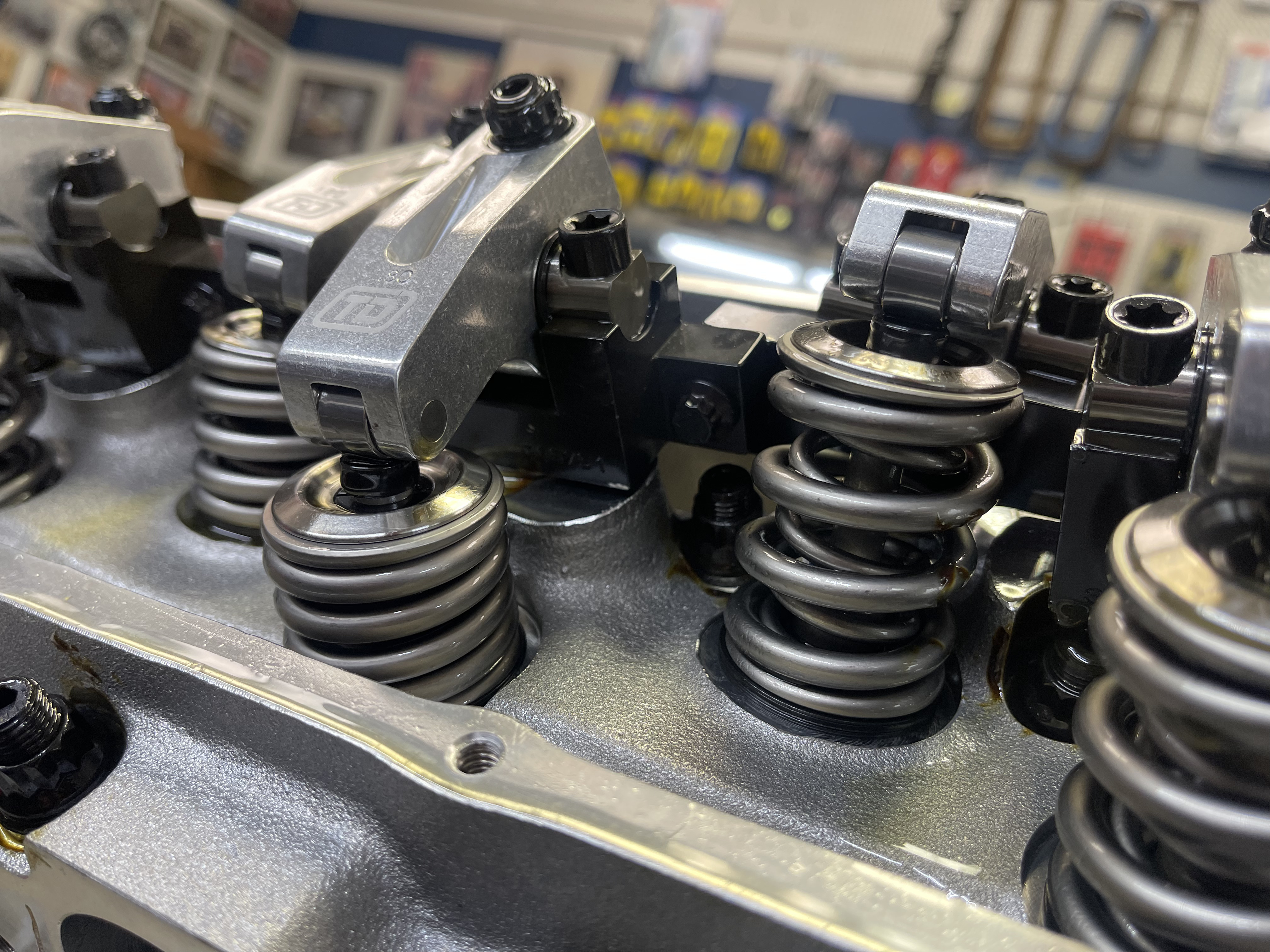
Retainers, locks, and seals deserve a look at the same time. A cracked retainer or a lock that has fretted can masquerade as a spring problem. If the head is apart, I would rather inspect the whole valvetrain package than chase pressure numbers in isolation.
If you are planning a valve job or a cam change and want the spring package measured and set up against real seat and retainer geometry, that is exactly the work I do on high-performance valve jobs — documented pressures, not catalog guesses.
Frequently Asked Questions
How often should race valve springs be checked?
For most race applications I like a pressure check every season at minimum, and sooner after any valvetrain failure, cam change, or stretch of hard heat cycles. Street engines can go longer, but any drop in power, odd valvetrain noise, or unexplained float symptoms is reason to test immediately.
What spring pressure loss means the springs need replacing?
It depends on the package, but if open or closed pressure has fallen outside the window the cam and retainer were set up for, I replace the set. A few pounds of drift can be normal; a clear step down from the build sheet numbers is not something I leave in a race head.
Can I check springs without removing the cylinder heads?
You can get useful clues from installed-height checks and on-car feel, but a proper load test on a spring tester is still the cleanest way to know where the pressure actually sits. When the engine is apart for a valve job, that is the right time to document every spring.