October 14, 20256 min read
CBN Block Resurfacing Explained
By Paul Ferreira
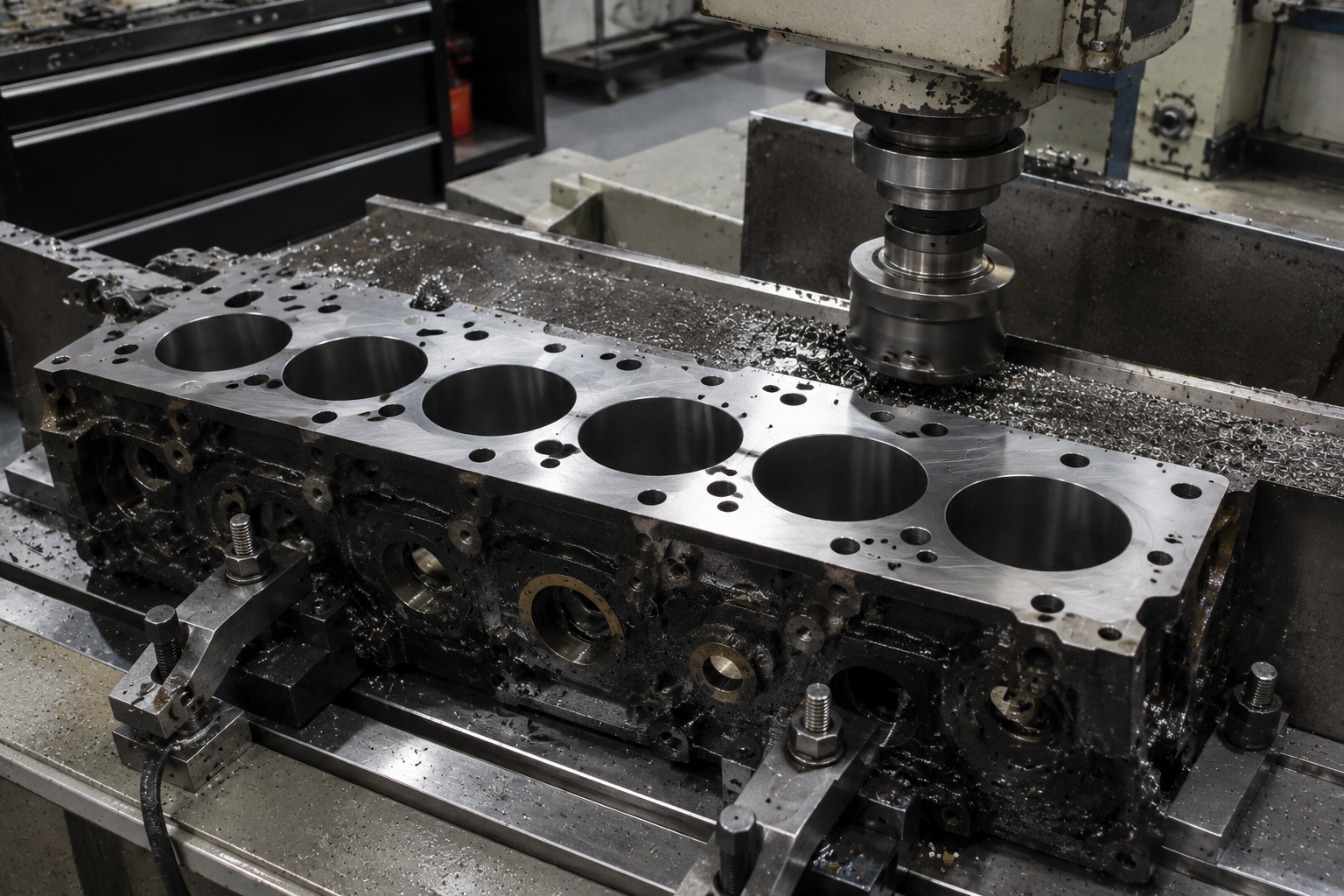
Block resurfacing sounds simple: make the decks flat again. The method and finish matter more than that sentence suggests. CBN (cubic boron nitride) tooling is how I cut decks when I want a consistent, controlled surface for modern gasket materials. Understanding why helps explain why a casual fly-cut is not the same job.
What Resurfacing Is Trying to Fix
Decks warp, erode, and pick up damage over time. High heat, previous failures, and uneven clamping all leave a surface that no longer seals the way a MLS gasket expects. Resurfacing restores flatness and establishes a finish the gasket can live with. It can also set deck height as part of a compression or quench plan — but only when that number is intentional.
I measure the deck before cutting. You need to know how much material is required and whether both banks need the same correction. Cutting blind to hit a pretty finish without understanding height is how compression ratios drift from the build plan.
Why CBN Finish Matters
CBN cutters produce a fine, consistent deck finish suited to multi-layer steel gaskets when the machine and setup are right. The goal is not the roughest surface that still looks machined, and not a mirror that can hurt gasket bite. It is a controlled texture and flatness the gasket manufacturer’s intent can work with. That distinction matters more on aluminum decks and high-clamp stud packages than people expect.
Poor finishes and uneven decks show up as seepage, blown gaskets, or coolant issues that get blamed on torque sequence alone. Torque matters — but it cannot fix a deck that was never flat or was finished incorrectly. I would rather spend time verifying the cut than explaining why a new gasket failed on a weekend.
How Much Material to Remove
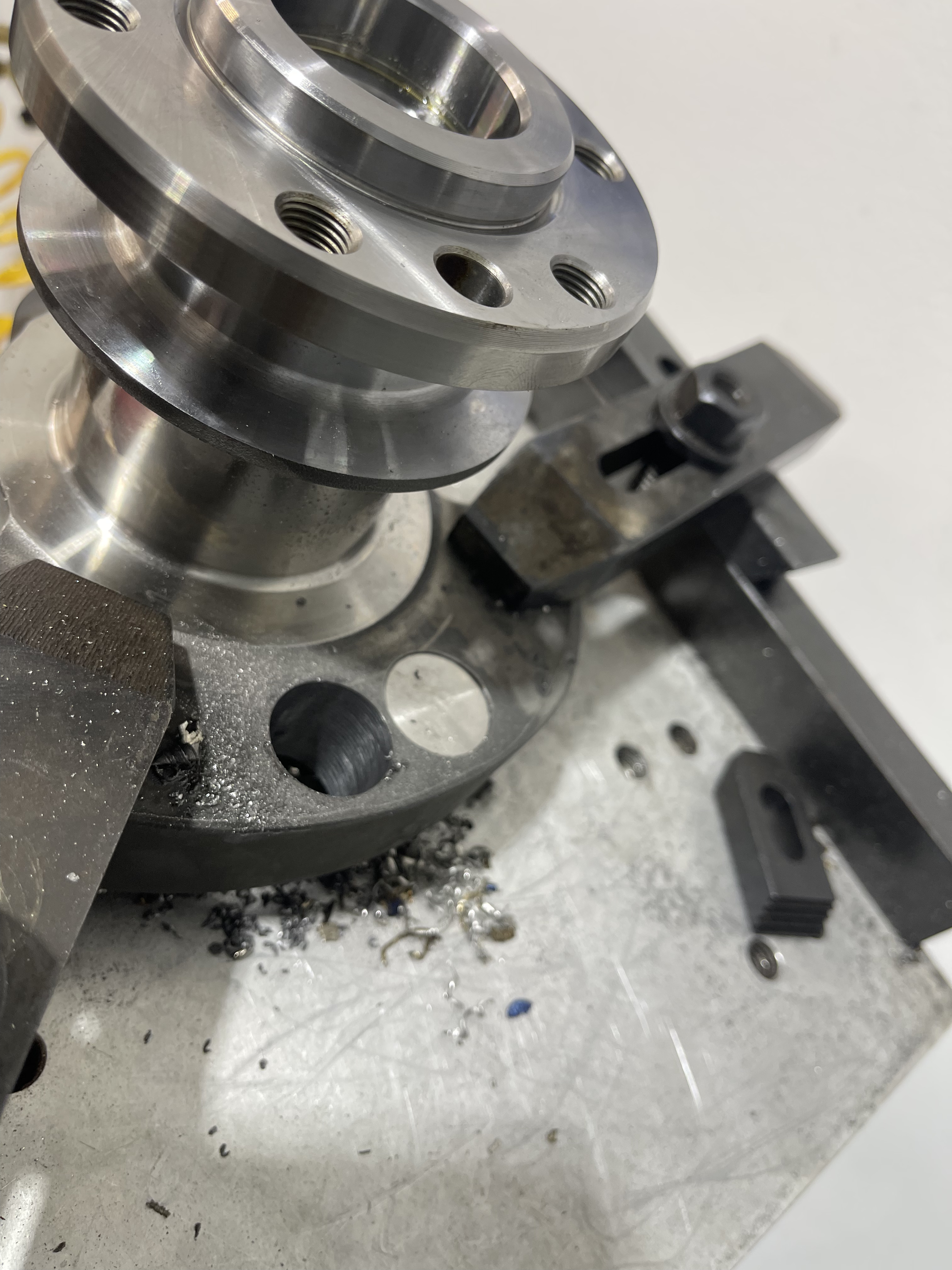
Less is not always safer if the deck is still not flat. More is not always better if you drive compression and piston-to-head clearance outside the plan. I remove what the measurements require to establish flatness and finish, then stop. Chasing a mirror look by cutting deeper without a height target is how quench and gasket fire-ring seating drift from the build sheet.
Aluminum and iron decks also behave differently under the cutter and under heat later. Material, previous cuts, and fastener strategy all influence how I approach the pass. Resurfacing is still a judgment call guided by numbers — not a fixed thousandths recipe for every block that rolls in.
Where Resurfacing Fits in the Machine Plan
Deck work interacts with bore finishing and sometimes with main alignment. I keep resurfacing inside a coherent sequence so later honing and assembly still make sense. A deck cut that ignores those relationships creates new problems while solving an old leak. When the deck is done right, the head gasket finally has a surface worthy of the clamp load you will put on it.
If your block needs decks brought back to flat with a finish suited to modern gaskets, that is the focus of the block resurfacing work I do — measured removal, intentional height, and a surface built for seal.